Exile and Expatriation in Modern American and Palestinian Writing by Ahmad Rasmi Qabaha
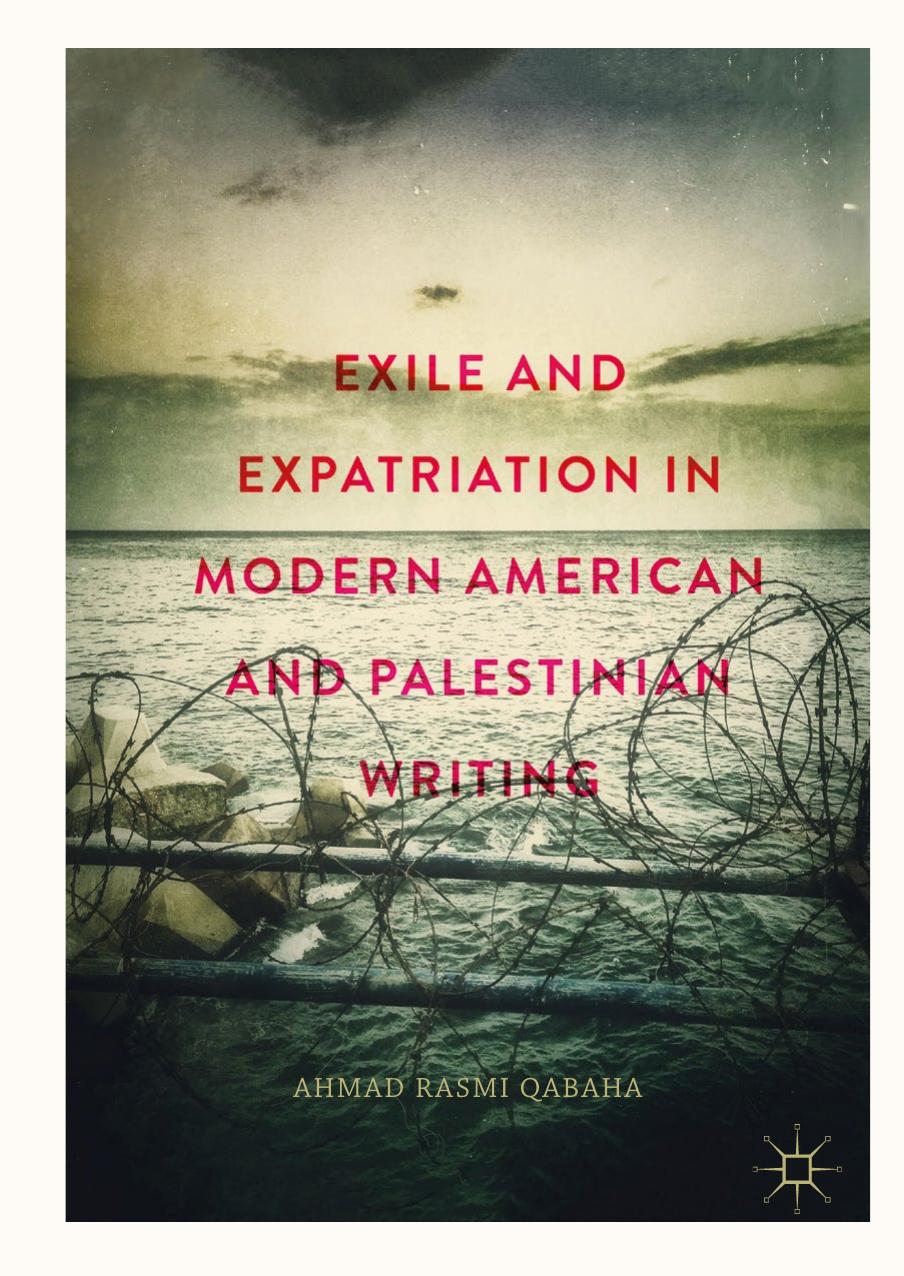
Author:Ahmad Rasmi Qabaha
Language: eng
Format: epub, pdf
Publisher: Springer International Publishing, Cham
Stein’s creation of a boundary and her attachment to a ‘bubble’ free her to be ‘alone with English’ and herself, which in turn facilitates her quest to develop a singular literary identity and work more productively. 21 In so doing, Stein does not abandon her place of origin , nor does she seek enclosure. Stein’s ‘boundary-creation’ and living in ‘a bubble’ facilitates and allows her to look around/out while living in a shelter that protects her interiority, linguistic identity and her link with the US , as well as securing her a space of creativity . Fechter remarks that a ‘bubble’ creates a bounded ‘inside’ that is sheltered from an ‘outside’, but it does not reduce the significance of any of these constructs. 22 The boundary which separates inside and outside is provisional and artificial, so it serves Stein to find a temporary refuge in isolation and a space where she can ‘lose [herself] in writing’ and live ‘only with English language’. 23
That is, Stein’s relationship with Paris involves both detachment and attachment which, in Stein’s view, reinforces her national sense . By distancing herself linguistically from the French, Stein refigures her Americanness and foregrounds impulses that trigger a national identification . At the same time, while being physically attached to Paris and detached from the US , Stein has the chance to contribute to her national literature . Stein views her self-centred approach in Paris France as conducive to original creation of ‘twentieth-century American literature’. 24 For Stein, the background of France is crucial ‘for the twentieth century and its innovations—innovations which Stein consistently associates with America and herself’. 25
I should emphasise again that in Stein’s conception, the boundary (inside/outside) is crucial for ‘the dialectic to continue to function’. 26 Only through maintaining her American identity while being in France can ‘the French estrangement succeed in protecting the interiority and freedom , built through discontinuity , which is necessary for writing’. 27 Katz demonstrates that ‘writing is an encounter with an “unreality” which nevertheless is “really there,” and according to this logic, should Stein come to feel “French,” France would no longer occupy this role for her’. 28 During the process of the dialectical encounter with her national home , which Edward Said , whose exilic condition will be compared with Stein’s expatriation in the next section, called ‘being both an insider and outsider ’, Stein emphasises that she does not lose any of the defining features of her Americanness . 29 She writes that ‘it is not what France gave you but what it did not take away from you that was important’. 30
Download
Exile and Expatriation in Modern American and Palestinian Writing by Ahmad Rasmi Qabaha.pdf
This site does not store any files on its server. We only index and link to content provided by other sites. Please contact the content providers to delete copyright contents if any and email us, we'll remove relevant links or contents immediately.
4 3 2 1: A Novel by Paul Auster(12372)
The handmaid's tale by Margaret Atwood(7757)
Giovanni's Room by James Baldwin(7325)
Asking the Right Questions: A Guide to Critical Thinking by M. Neil Browne & Stuart M. Keeley(5757)
Big Magic: Creative Living Beyond Fear by Elizabeth Gilbert(5754)
Ego Is the Enemy by Ryan Holiday(5413)
The Body: A Guide for Occupants by Bill Bryson(5080)
On Writing A Memoir of the Craft by Stephen King(4931)
Ken Follett - World without end by Ken Follett(4723)
Adulting by Kelly Williams Brown(4565)
Bluets by Maggie Nelson(4547)
Eat That Frog! by Brian Tracy(4525)
Guilty Pleasures by Laurell K Hamilton(4439)
The Poetry of Pablo Neruda by Pablo Neruda(4097)
Alive: The Story of the Andes Survivors by Piers Paul Read(4018)
White Noise - A Novel by Don DeLillo(4002)
Fingerprints of the Gods by Graham Hancock(3995)
The Book of Joy by Dalai Lama(3974)
The Bookshop by Penelope Fitzgerald(3843)
